
Angelo Mazzei Di Poggio
Abstract
The Palazzo Spurinna Corona of Monte Castello di Procchio, concealed within the chestnut forests of western Elba, represents one of the most monumental aristocratic residences of Etruria. Misidentified for centuries as a medieval fortress, recent archaeological investigations have redefined it as a vast Domus Tripartita ad Impluvium linked to the noble Spurinna family of Tarquinia. This paper presents a comprehensive synthesis of archaeological, epigraphic, and historical evidence, reinterpreting the site as a palatial seat of Etruscan power, domesticity, and cultic practices. It discusses the site’s strategic maritime significance in the Tyrrhenian Sea, the role of the Spurinna dynasty in Etruscan geopolitics, and the cultural implications of inscriptions found on-site. The study further addresses issues of site neglect and proposes directions for future research and preservation.
1. Introduction
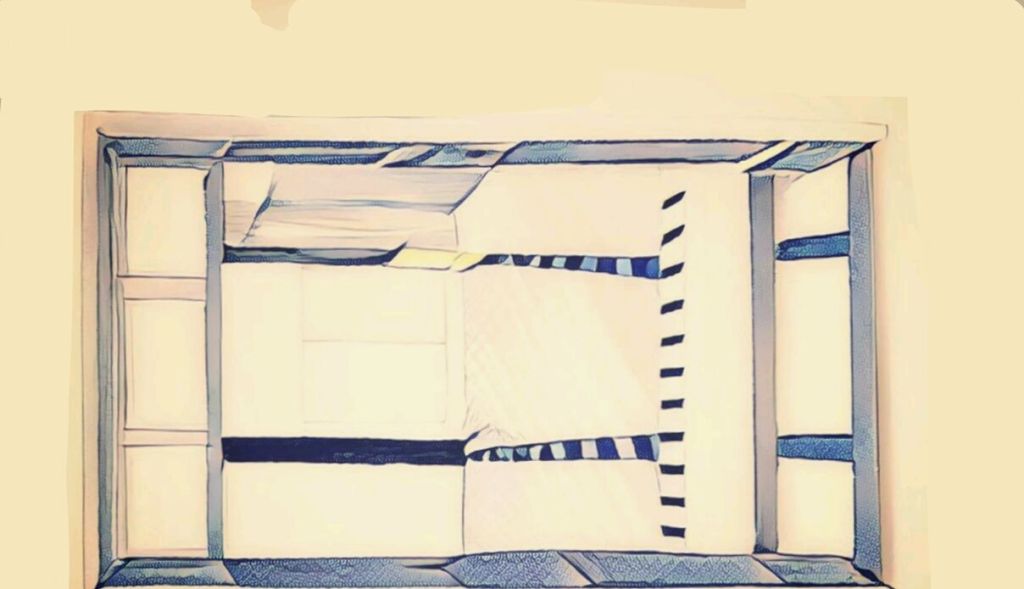
Hidden among the chestnut woods overlooking the Tyrrhenian Sea, the ruins of what was long mistaken as a medieval borgo abandoned post-Black Death have recently been identified as the Palazzo Spurinna Corona—a sprawling aristocratic residence of the Etruscan elite. Measuring approximately 1,800 m² per floor, the complex belongs to the Italic architectural tradition known as Domus Tripartita ad Impluvium, characterized by a central atrium with a rainwater-collecting impluvium draining into a cistern below. This paper aims to re-evaluate the site’s archaeological significance, its political and economic role in the Etruscan world, and its place within the broader narrative of Etruscan decline and legacy.
2. Archaeological Context and Site Description
Situated roughly 100 meters above sea level at Monte Castello di Procchio, the site commands a strategic vantage point with clear views of both northern and southern coasts of Elba. Its location was undoubtedly chosen for control over key maritime routes and planes of Campo and Procchio [[1]][[2]].
Early archaeologists catalogued the remains as a Fortezza d’altura (hilltop fortress), a classification challenged by later findings. During World War II, German troops installed a concrete bunker in the central atrium, causing damage and looting [[1]].
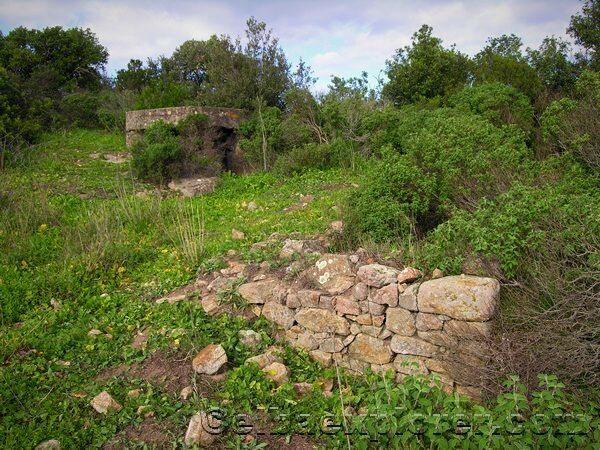
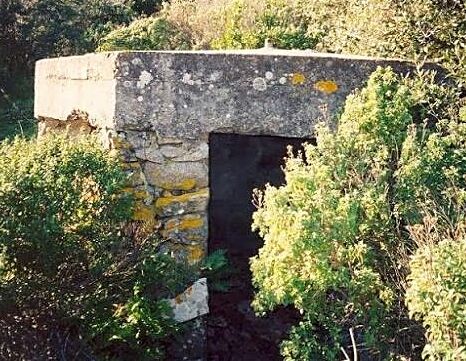
Systematic excavations led by Professor Adriano Maggiani in the late 1970s unearthed complex architectural features and artifacts that contradict the fortress interpretation, revealing instead a palatial residence with residential, ceremonial, and service spaces symmetrically organized around a central atrium—a canonical yet vastly enlarged Domus Tripartita ad Impluvium [[2]][[5]].
The ground level’s footprint, exceeding six times that of typical aristocratic Etruscan houses, suggests an exceptional scale befitting a princely seat, identified by me as the *falathrium Spurinial—possibly meaning “Spurinna Palace” from the Etruscan *falathra (palace) [[3]][[5]].
3. Architectural Features and Domestic Assemblages
The Domus Tripartita ad Impluvium is characterized by inward-facing rooms around a central courtyard. This design promotes seclusion and climatic regulation. The Elban example’s atrium is exceptionally wide, with flanking wings likely housing private apartments, textile workshops, and storerooms [[3]][[5]].
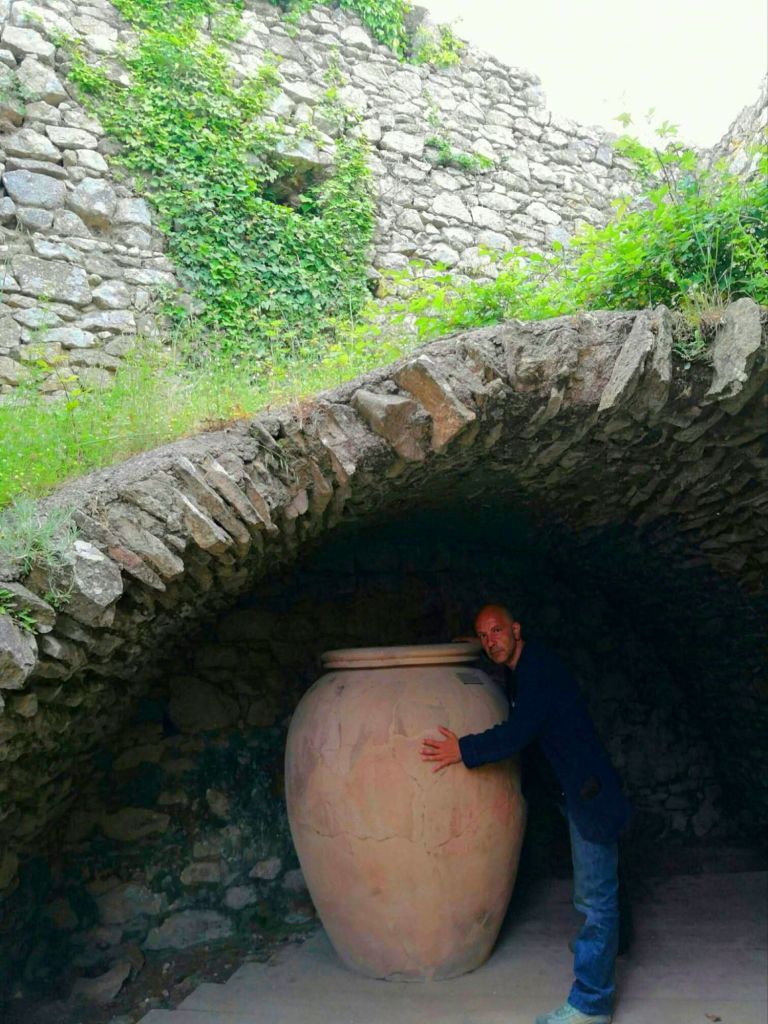
Archaeological finds include fine black-glazed tableware inscribed with the family name Spurinies, loom weights, spindle whorls, and fragments of eight enormous dolia (large storage jars) for grain [[5]][[39]]. The assemblage reflects a complex domestic economy combining female textile production—a significant cultural and ritual activity—and administrative grain storage, inconsistent with a purely military function [[3]][[5]][[39]].
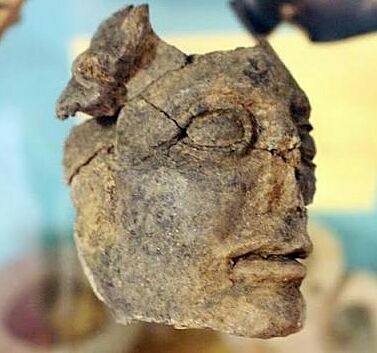
Votive terracotta fragments, including a refined female head in classical style comparable to finds at Kainua (Marzabotto), indicate a cultic dimension integrated into the residence, consistent with Etruscan religious practices [[7]].
4. Epigraphic Evidence and Interpretations
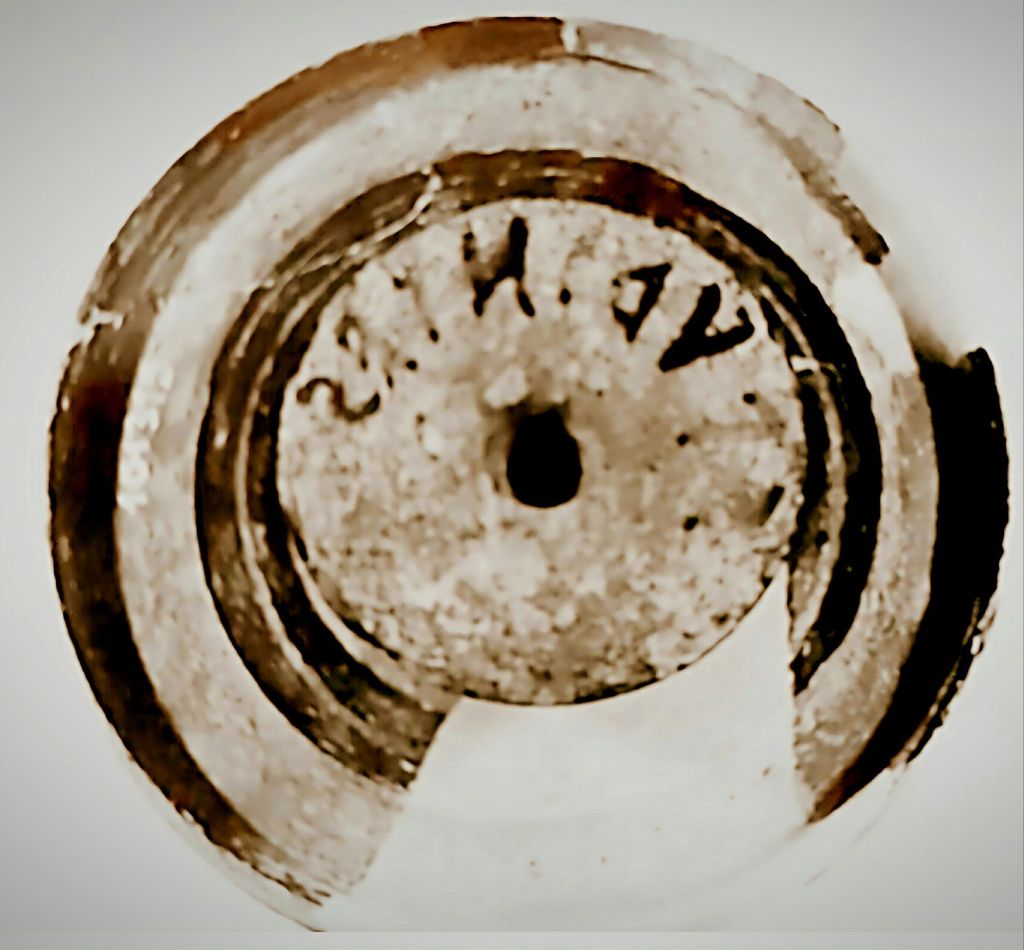
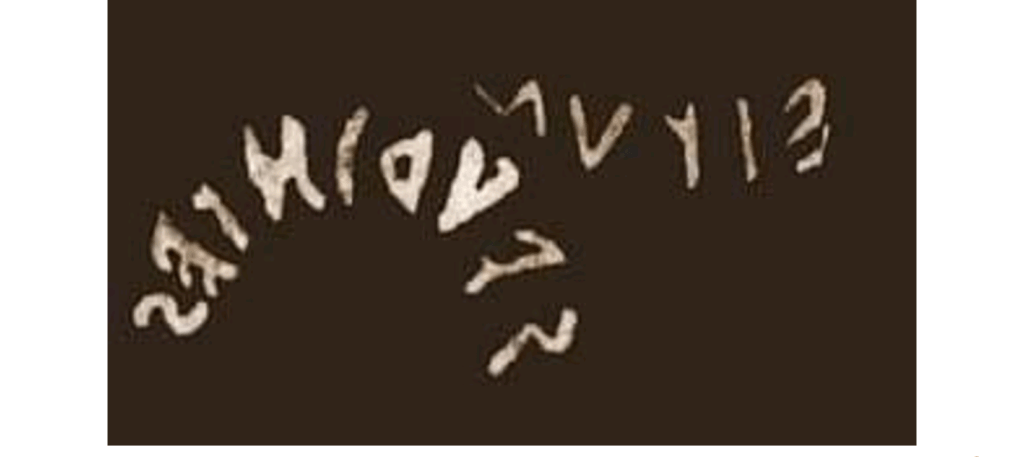
Two key inscriptions link the complex to the Spurinna and Corona families. A high-quality ceramic plate bears the painted mark SPURINIEŠ, affirming ownership [[6]][[41]].
More enigmatic is an inscription on one of the dolia reading CURUNAS CRETNAI ~THA, followed by traces possibly reconstructed as [RAM]ΘA or Ramtha [[6]][[33]][[35]]. Earlier interpretations read this as the female personal name Ramtha Curunas Cretnai, potentially the lady of the house [[3]][[5]][[6]].
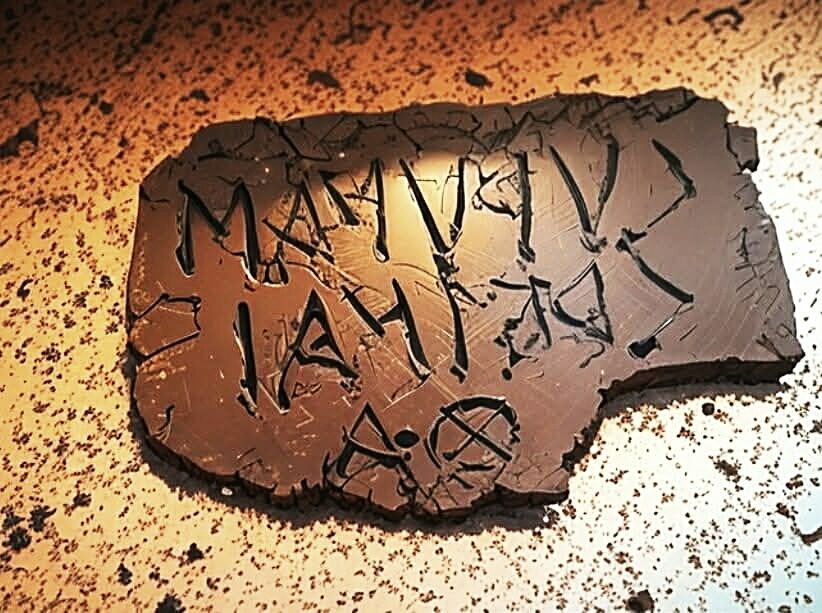
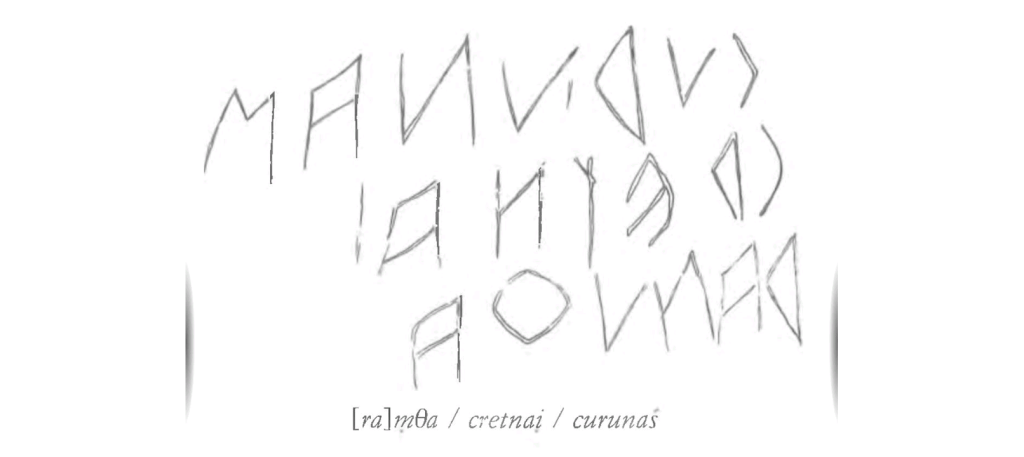
However, the order and nature of the inscription are irregular. Typically, Etruscan names follow the pattern praenomen-gentilicium-cognomen, but here the sequence is reversed or ambiguous: Curunas Cretnai [-]tha [[5]][[6]]. Recent reassessments propose that Curunas relates not to a family name but to grain (curun), and Cretnai denotes provenance (“from Crete”), thus possibly indicating contents or origin rather than a personal name [[2]][[6]][[35]].
The inscription’s linguistic components suggest economic and sacred dimensions, linking the site’s function to granary storage and trade networks across the Tyrrhenian [[2]][[6]]. The presence of a female name or title may also underscore the role of women in estate management or ritual activities [[3]][[6]][[38]].
5. Historical and Political Significance of the Spurinna Dynasty
The Spurinna were a prestigious family from Tarquinia, active from the 6th century BCE onward. Latin inscriptions, known as the Elogia Spurinna, record the deeds of Velthur and Aulus Spurinna, both praetores and military leaders in the 4th century BCE [[6]][[17]][[18]].
One inscription commemorates Velthur’s overseas campaign, possibly the earliest Etruscan army crossing the sea against Syracuse in Sicily [[6]][[18]]. Another recounts Aulus Spurinna’s military successes in Latium [[6]]. These deeds coincide with the geopolitical struggles involving Veii, Rome, and Syracuse for control of metal-rich islands like Elba [[6]].
Torelli write his reading following Jacques Heurgon:
V[-4–]ur Spur[—] [-]artis f. pr. I[—] magistrátu alt[ – 4–] exerc[i]tum habuit, alte[ -5.
5 Siciliam duxit; primus o[ -5 –] Etruscorum mare cu[m-6-7–] traiecit; á qu[-13-14 –] aurea ob vi[ – 15-16 –].
Questi sono i supplementi da me proposti nel 1975:20
V[elth]ur Spur[inna] [L]artis f. pr(aetor) I[I; in] magistrátu alt[erum] exerc[i]tum habuit, alte[rum in]
5 Siciliam duxit; primus o[mnium] Etruscorum mare cu[m legione] vel cu[m milite] traiecit; á qua clupeo et corona] aurea ob virtutem donatus est].
Tradition names Velthur as “the last king of Tarquinia” and his consort, Ramessa Corona Cretani (epigraphically Ramtha Curunas Cretnai), as “the princess of Tuscania” [[6]]. Their palatial residence at Procchio thus symbolizes the final Etruscan monarchy’s presence on Elba, representing a twilight era of Etruscan sovereignty [[6]][[8]].
6. Socioeconomic and Cultural Dynamics
The combination of domestic implements, textile production tools, and votive offerings points to a residence where politics, economy, and religion intersected [[3]][[7]].
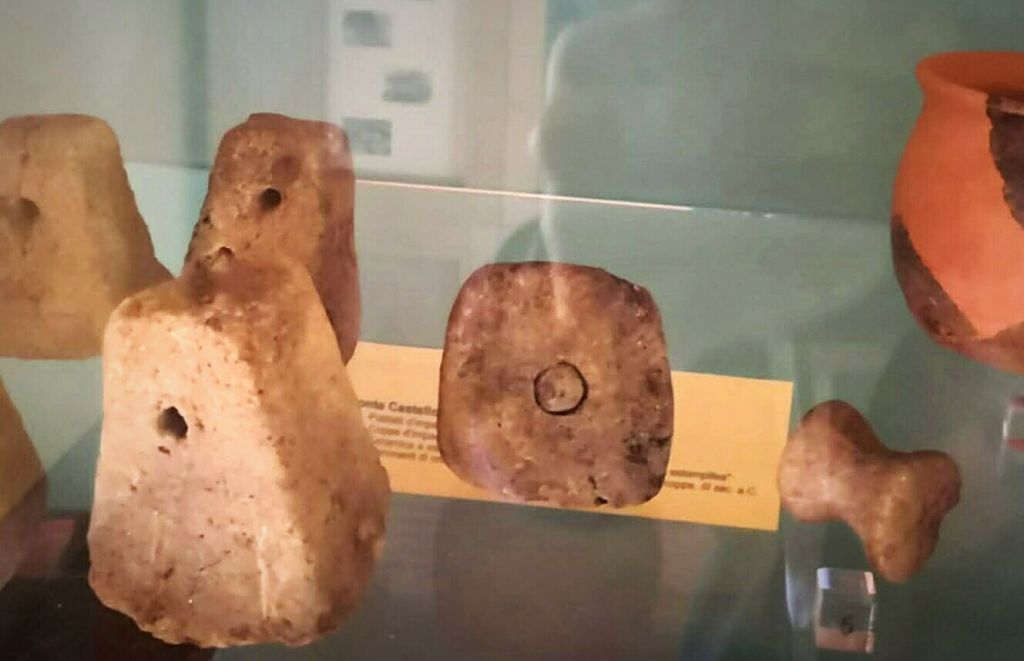
Textile activities, traditionally associated with elite Etruscan women, held both economic and ritual value. The presence of loom weights and spindle whorls in female quarters supports this model [[3]][[7]].
Grain storage indicated by large dolia, possibly labeled with geographic or economic information, underscores the estate’s role in resource control and trade [[2]][[6]][[39]].
The site’s artifacts include imported ceramics from diverse regions—Attic red-figure ware, Lazio, Campania, and possibly Populonian styles—attesting to a wide-ranging network of cultural and commercial connections [[39]][[41]].
7. Site Neglect and Urgent Calls for Conservation
Despite its significance, the Palazzo Spurinna Corona remains largely unprotected and unrecognized. Located near the popular Grande Traversata Elbana hiking route, it lacks signage and public awareness [[7]][[20]][[22]].
Post-excavation, much material was dispersed between regional museums, with key artifacts like the great inscribed dolium shattered and awaiting restoration [[7]][[22]][[39]]. The site’s classification as a “fortress” hindered proper academic attention and public valorization [[7]][[24]].
A renewed campaign is urgently needed to conduct comprehensive excavations, publish findings fully, consolidate artifact collections in a dedicated local museum, and implement protective and interpretive measures [[7]][[24]].
8. The Legacy of the Spurinna and Etruscan Identity
Beyond Elba, the Spurinna family influenced Roman history and myth. Plutarch recounts that a Spurinna haruspex warned Julius Caesar of the Ides of March, connecting Etruscan prophetic tradition to Roman political destiny [[7]][[14]].
The Elban palace stands as a final monument to the Etruscan aristocracy’s resilience, symbolizing a cultural continuity on the Tyrrhenian islands after the decline of mainland Etruria [[8]].
9. Conclusion
The Palazzo Spurinna Corona of Monte Castello di Procchio challenges previous interpretations of Etruscan architectural and social history. Its monumental scale, rich domestic and cultic assemblages, and epigraphic evidence redefine it as a princely residence embodying political authority, economic control, and religious practice.
This site, tied intimately to the influential Spurinna and Corona families, provides unique insights into the late Etruscan aristocracy and their networks across the Tyrrhenian Sea.
Urgent preservation and scholarly attention are imperative to rescue this heritage from oblivion and integrate its story within the broader discourse on Etruscan civilization and Mediterranean history.
References
- Maggiani, A. Corsica e Populonia; Da Genova ad Ampurias [[1]][[5]][[7]][[39]][[46]]
- Zecchini, M. Isola d’Elba. Le Origini [[1]][[6]]
- Torelli, M. “Gli Spurinas” [[6]][[17]][[18]]
- Corretti, Cambi, Pagliantini, various studies on Elban archaeology [[1]][[6]]
- Groviglio.News articles (2024): “S6 E4 – Palazzo Etrusco di Procchio” and “Una enorme domus etrusca all’Isola d’Elba” [[1]][[7]]
- Plutarch, Life of Caesar (translated excerpts) [[7]][[14]]
- Etruskische Texte AT 1.210-215 [[38]]
- Pancrazzi, O. Castiglione di San Martino and associated studies [[40]][[44]]
- Colonna, G. Secondo Congresso Internazionale Etrusco, Florence 1985 [[19]]
Acknowledgments
I thank the previous excavators, particularly Professor Adriano Maggiani – prematurely died last may 2025 -, for their foundational work, and the numerous scholars whose studies have informed this synthesis. Special recognition to local heritage advocates striving for the conservation of Elba’s archaeological treasures.
 groviglio.news