
Here is the English translation of the article, the original Italian version follows
Circe and the Amber Necklace from the Baltic
Corriere Elbano
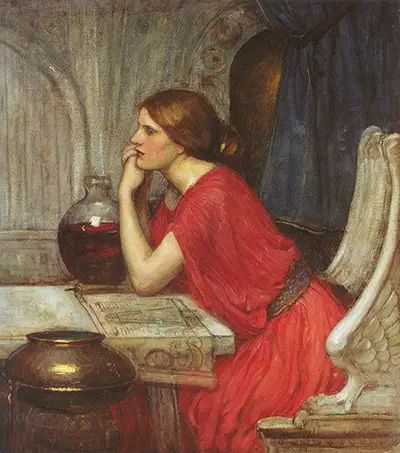
A few weeks ago, specialized magazines discussed a time travel experiment conducted by a team of researchers who succeeded, through a quantum computer, in reverting a process to its previous state. Divine. It is what knows no time.
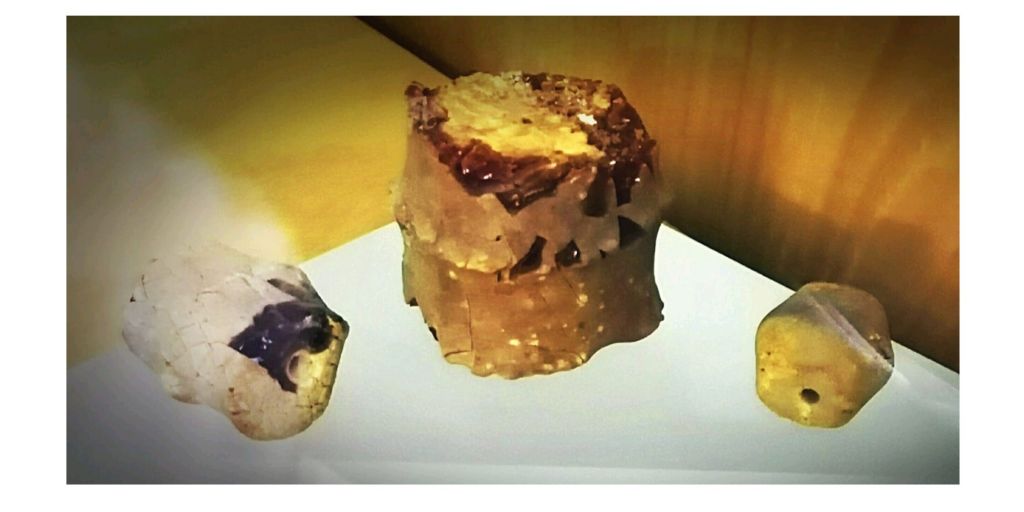
Perhaps that is the purpose of museums, to show us these different forms of beauty, different and yet all expressions of a timeless place, that of the spirit, which is displayed in museums. In the third showcase of room 1 of the Marciana Museum, where you will find me to welcome you, three objects are on display that at first glance go absolutely unnoticed.
They look like insignificant pebbles, but they were once shiny elements of an amber necklace, alternating with gold rings or other metals and precious stones. To think that there is even a world conference on these artifacts, which scholars in the field call “Tiryns-type Amber Beads,” to distinguish them from other types like those from Allumiere, etc.
A renowned prehistory scholar, Ms. Nuccia Negroni, recalls how these amber necklaces were a status symbol reserved for the high aristocracy, accompanying sumptuous garments and other rich ornaments.
To wear them, one had to be a patrician. They were almost certainly produced in Frattesina, on the Po River, where raw material arrived all the way from Poland on the Baltic Sea.
The beads from the Marciana Museum have a recognizable shape, characterized by a very evident central rib; they are called “Tiryns type” after the famous Mycenaean site where some specimens were found. They formed sumptuous and complex necklaces, often consisting of multiple strands of beads of different shapes; in some cases, the amber was alternated with colored glass paste beads, rock crystal, perhaps gold and silver.
Amber was an exotic material, and therefore precious and expensive, as it was collected exclusively on the distant and unknown coasts of the Baltic and North Sea; it was also highly coveted because it was associated with solar worship, which at that time was widespread throughout Europe. Amber was also attributed medicinal and healing properties.
Therefore, possessing a necklace made of this material meant declaring oneself part of an elite that could afford it, while at the same time placing oneself under the protection of the Sun god and defending against diseases and the evil eye. The necklaces with Tiryns-type beads were quite rare, but spread throughout the known Mediterranean world at that time, from Sardinia, to Italy, to Greece, all the way to the Black Sea and the coasts of Asia Minor.
In Euripides’ Trojan Women (Eur. Tro. 437), the author refers to Circe, who lived on one of these Tyrrhenian islands, as the “Liguste (Λιγυστίς Κίρκη)”. This echoes the grandeur of Mycenae, that palace civilization, with traders and adventurers traveling far and wide across Europe. Aethalides, Orpheus, Nestor, and Odysseus all came to these parts at that time in search of Circe. Our idea that Circe was a witch arises from the unsatisfactory translation of the Greek term for pharmacy (ΦΑΡΜΑΚΕΙΑ), which, if reduced to “magic,” ends up giving a reductive image of this primordial great woman of science. The knowledge of herbs and their uses as anti-inflammatories, sedatives, anxiolytics, stimulants, or even hallucinogens, was seen by the Greeks as a science originating from the East, and the Etruscans were at the forefront of medical knowledge (cf. Dioscorides Pedanius).
According to myth, Circe came from Armenia, where she had arrived from the oceanic coasts of Iran, the daughter of the union between Persia and the Sun. From Aristotle (or a contemporary of his, 4th century B.C.) in On Marvelous Things Heard, we know that in Aethalia, iron was discovered in the mines where copper had long been extracted.
And we hope that when you leave the museum, something from that 13th century B.C. era will remain in your mind—because the magic of Elba is precisely the time that never passes and the scents of its thousand herbs.
Original Version (Italian):
Circe e la collana d’ambra del Baltico
Corriere Elbano
Poche settimane fa si è parlato sulle riviste specializzate di un viaggio nel tempo realizzato da un’equipe di ricercatori che sono riusciti tramite un computer quantico a riportare un processo al suo stato precedente. Divino. è quello che non conosce tempo.
Forse a questo servono i musei, a mostrarci queste forme diverse di bellezza, diverse eppure tutte quante espressione di un luogo senza tempo, quello dello spirito, che nei musei si mostra. Nella terza vetrina della sala 1 del Museo di Marciana, dove mi troverete ad accogliervi, sono esposti tre oggetti che a prima vista passano assolutamente inosservati.
Sembrano dei sassolini insignificanti, invece una volta erano degli splendenti elementi di una collana d’ambra, che si alternavano ad anelli d’oro o di altri metalli e pietre preziosi. E pensare che esiste addirittura una conferenza mondiale su questi reperti che gli studiosi del settore chiamano “Vaghi d’Ambra di tipo Tirinto”, per distinguerli da quelli di tipo Allumiere, ecc.
Una celebre studiosa di preistoria, la signora Nuccia Negroni, ricorda come queste collane d’ambra fossero uno status symbol riservato all’alta aristocrazia, ad accompagnare vesti sontuose ed altri ricchi ornamenti.
Per portarle bisognava essere patrizi. Essi venivano quasi certamente prodotti a Frattesina, sul Po, da dove il materiale grezzo arrivava fin dalla Polonia sul Baltico.
I vaghi del Museo di Marciana hanno una forma ben riconoscibile, caratterizzata da una carenatura centrale molto evidente; vengono chiamati “tipo Tirinto” dalla famosa località micenea in cui sono stati ritrovati alcuni esemplari. Formavano collane sontuose e complesse, consistenti spesso in più fili di vaghi di forme diverse; all’ambra in alcuni casi si alternavano perle di pasta vitrea colorata, di cristallo di rocca, forse di oro e di argento.
L’ambra era un materiale esotico, e quindi prezioso e costoso, poiché si raccoglieva esclusivamente nelle lontane e sconosciute coste del Baltico e del mare de Nord; era inoltre molto ambito perché legato al culto solare, che in quel momento era diffuso in tutta l’Europa. All’ambra erano attribuite anche proprietà medicinali e taumaturgiche.
Possedere quindi una collana di questo materiale significava dichiarare di far parte di una élite che poteva permettersi di acquistarla, e nello steso tempo ci si metteva sotto la protezione del dio Sole e ci si difendeva dalle malattie e dal malocchio. Le collane con vaghi tipo Tirinto poi erano abbastanza rare, ma diffuse in tutto il mondo mediterraneo allora conosciuto, dalla Sardegna, all’Italia, alla Grecia, fino al mar Nero e alle coste dell’Asia Minore.
Nelle Troiane (Eur. Tro. 437) di Euripide, l’autore chiama Circe, che abitava una di queste isole del Tirreno, la “Liguste (Λιγυστίς ̀Κίρκη)”. Risuona l’eco della grandezza micenea, di quella civiltà dei Palazzi, coi viaggi in lungo e in largo per l’Europa di commercianti e avventurieri. Aethalide, Orfeo, Nestore e Odisseo, tutti venuti da queste parti in quell’epoca in cerca di Circe. La nostra idea che Circe fosse una maga, nasce dalla insoddisfacente traduzione del termine greco per farmacia (ΦΑΡΜΑΚΕΙΑ) che se ridotto a “magia” finisce per dare un’immagine riduttiva di questa primordiale grande donna di scienza. La conoscenza delle erbe e dei loro usi come antinfiammatori, lenitivi, ansiolitici, eccitanti o addirittura allucinogeni, era vista dai greci come una scienza proveniente dall’oriente, e gli Etruschi erano all’avanguardia in materia medica (cfr. Dioscoride Pedanio).
Circe, secondo il mito, proviene dall’Armenia, dove era giunta dalle coste oceaniche dell’Iran figlia dell’unione tra Persia e Sole. Dall’Aristotele (o suo contemporaneo, IV sec. a.C.) de Le Cose Meravigliose, sappiamo che in Aethalia, il ferro fu scoperto nelle miniere dove da lungo tempo si era scavato il rame.
E ci auguriamo che quando sarete usciti dal museo qualcosa di quell’epoca del XIII secolo a.C. vi rimanga in testa senza tempo – che la magia
 groviglio.news