
Order and Chaos
between Charles Péguy, Theodor Adorno, Antonio Dàmasio, and Carl Gustav Jung
STILL ON DESCARTES AND HIS METHODS AND THE ANCIENT GODS
There are days, fortunately rare, when the symptoms of my recent illness resurface. These hidden enemies, whether we call them chronic viruses or autoimmune issues, don’t relocate from their residence, and not recognizing them allows them the audacity to act like Antonio Dàmasio’s emotions: they slip away and don’t show their face, so not grasping their essence, we can only counter them with unconventional weapons. Thus, from being collectors of books, words, and ideas, we find ourselves with an assortment of medicines to take, rivaling old Sergio Caputo.
Yesterday was one of those fortunately rare days. Like in an astral conjunction or—more familiarly with my lexicon—like in a Jungian synchronicity, it was as if I and the rest of the world slipped and then got back up together, in sync. The morning began with confirmation that what I suspected had gone worse than I could have managed, indeed, had gone badly. The very text—which was to be published by someone else’s editorial, for which I should have strived like never before to provide a clear and fluid result—turned out to be a stuffed panettone. Writing is a strange art that oscillates between the temptation to recount the disorder of things as they are and the responsibility to structure them in an order that makes them understandable.
But let’s proceed with the events of yesterday. At one point, pantaempathically—meaning with the gift of feeling all the weight of the passion of everything—the news of the death of the emeritus Prime Minister hit me. I say “emeritus” as in the Treccani, in ancient Rome the emeritus miles who had completed military service and received discharge and the related rewards. Also, one who, no longer practicing his office, retains the rank and honors. Shortly after, I learned that a great comic actor and director, who gave his best in the eighties with pearls of national comedy, also passed away. I want to remember only a few selected titles that became cult for me about forty years ago: Ad ovest di Paperino, Madonna che silenzio c’è stasera, Io Chiara e lo Scuro, Caruso Pascoski, and Willy Signori.
My not perfectly successful article, I realize, is nothing compared to the departure of two personalities of this caliber for our country and its future. It was indeed a strange day, if even I, who in the square or at the bar with friends or acquaintances, am almost never a defender of the homeland, yesterday felt the synchronicity of the loss and the need to process it together, among fellow citizens.
When we are illuminated (enlightened) by an idea, it, in a state sometimes of preverbal nakedness, appears like a beautiful moving image, a dynamic of non-Euclidean geometries waiting to be reordered and formulated.
When we write what we want to say, we are led to this process of multiple and continuous translation. We dress our idea, relinquishing the natural charm of its pure nakedness. We bend it to discourse and intertwine it with the logic and canons of its styles, syntax, paradigms, and grammar. Finally, we soften its features and the harshness of its monstrous physiognomy, transforming its character from complex to banal (cf. Prigogine and Arendt), from cruel to sympathetic (cf. Richard Rorty), from crazy to politically correct.
Thus we deprive ourselves of the acclaimed ‘aorgic’ of Hölderlinian memory, renouncing the disorder in which our thought cradles itself and castrating it in language with the scissors of self-censorship.
There are three things after yesterday that I must rework with all of us. I must metabolize and reorder the sense of Berlusconi and Nuti, like pages of infamy and gossip that from today are consigned to memory as innocent pages of history and glory.
Finally, I must reconsider my philosophy of “collective emotions” (provisional name, which could be said in many other ways, such as CŌGITANT ERGO SUMUS), reconsider it, re-meditate it, and—above all—choose to what extent I will be able to show it raw and bare or how
much I will need to tame and constrain it if, in the end, I truly wish to tell you about it.
An appendix to the poorly executed article follows:
§§§
COLLECTIVE EMOTIONS
For me, the circle of the neuroscientist Antonio Damasio closes by returning to the ancients.
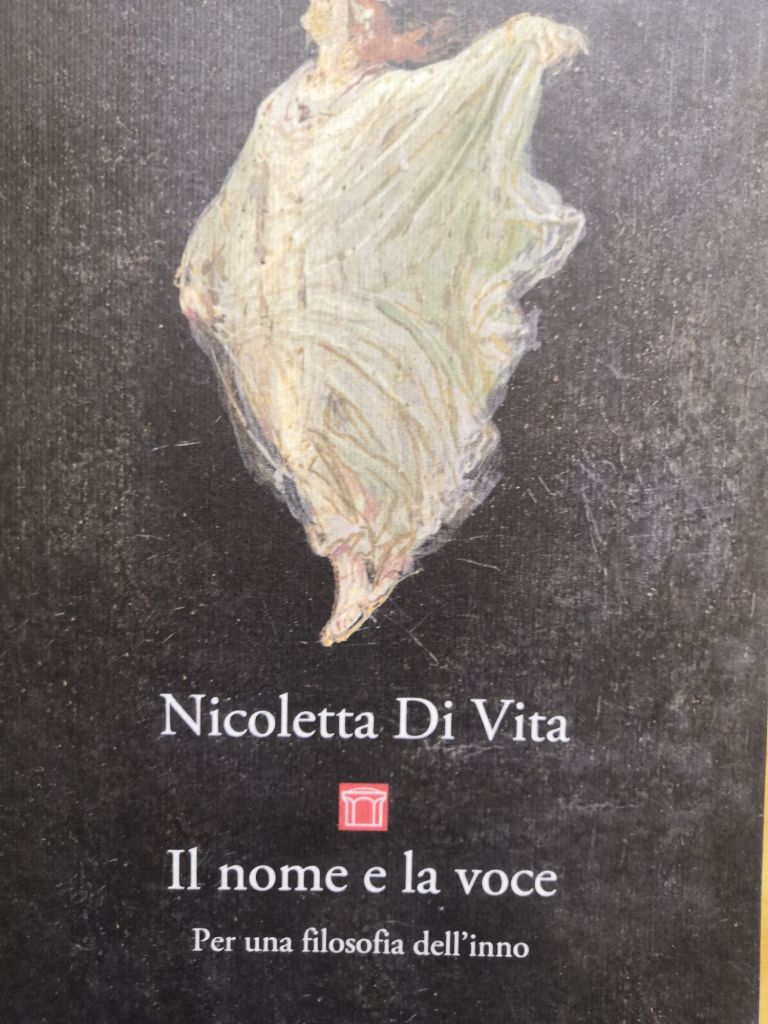
If we have emotions that we cannot control, define, domesticate, or tame, and they slither within us like demons (ΔΑΊΜΟΝΕΣ) that “divide” us from ourselves, tearing us apart and setting us on fire (ΑΥΤΌ ΔΑΊΟΜΕΝ), and then we transform them into rational feelings (cf. Alix Cohen’s Kant), because, like with wild beasts in the night, we manage to chase them until dawn and capture them out of exhaustion until they let themselves be faced and named, and in their gaze, we see Rilke’s Open, in a crossing of loves, man and beast become accomplices. Goleman would say it is emotionally intelligent to transform a pulsating emotion into a rational and defined feeling. But there are great and shared emotions in which we can feel sympathetic communion. The fact that they are collective emotions does not make them more acceptable or less monstrous. It is the moment of the sacred, where the only way not to be overwhelmed is—paraphrasing Nicolé Di Vi—to name a god.
__________________________
Note: I will talk about the Aesthetics exam with Aldo Giorgio Gargani from 32 years ago, which also included Theodor Adorno’s Aesthetic Theory, on another occasion.
bibliography generated by AI:
### Books and Authors:
1. **Charles Péguy**
– **Title**: Various Works
– **Publication Dates**: Various
– **Publisher**: Various
2. **Theodor Adorno**
– **Title**: Aesthetic Theory
– **Original Title**: Ästhetische Theorie
– **Publication Date**: 1970 (Posthumous publication)
– **Publisher**: Suhrkamp Verlag (German), University of Minnesota Press (English translation, 1997)
3. **Antonio Damasio**
– **Title**: The Feeling of What Happens: Body and Emotion in the Making of Consciousness
– **Publication Date**: 1999
– **Publisher**: Harcourt Brace
– **Title**: Descartes’ Error: Emotion, Reason, and the Human Brain
– **Publication Date**: 1994
– **Publisher**: Penguin Books
4. **Carl Gustav Jung**
– **Title**: Memories, Dreams, Reflections
– **Publication Date**: 1962 (Posthumous)
– **Publisher**: Pantheon Books
– **Title**: The Collected Works of C.G. Jung
– **Publication Dates**: Various (1953-1979)
– **Publisher**: Princeton University Press
### Additional References:
1. **Sergio Caputo**
– **Notable Works**: Various albums and songs from the 1980s
2. **Films and Directors Mentioned:**
– **Ad ovest di Paperino**
– **Director**: Alessandro Benvenuti
– **Release Date**: 1982
– **Madonna che silenzio c’è stasera**
– **Director**: Maurizio Ponzi
– **Release Date**: 1982
– **Io Chiara e lo Scuro**
– **Director**: Maurizio Ponzi
– **Release Date**: 1982
– **Caruso Pascoski di padre polacco**
– **Director**: Francesco Nuti
– **Release Date**: 1988
– **Willy Signori e vengo da lontano**
– **Director**: Francesco Nuti
– **Release Date**: 1989
### Philosophical References:
1. **Alix Cohen**
– **Title**: Kant on Emotion and Value
– **Publication Date**: 2014
– **Publisher**: Palgrave Macmillan
2. **Richard Rorty**
– **Title**: Contingency, Irony, and Solidarity
– **Publication Date**: 1989
– **Publisher**: Cambridge University Press
3. **Ilya Prigogine**
– **Title**: The End of Certainty: Time, Chaos, and the New Laws of Nature
– **Publication Date**: 1997
– **Publisher**: Free Press
4. **Hannah Arendt**
– **Title**: The Human Condition
– **Publication Date**: 1958
– **Publisher**: University of Chicago Press
5. **Rainer Maria Rilke**
– **Title**: The Book of Hours (Das Stunden-Buch)
– **Publication Date**: 1905
– **Publisher**: Insel Verlag
6. **Daniel Goleman**
– **Title**: Emotional Intelligence: Why It Can Matter More Than IQ
– **Publication Date**: 1995
– **Publisher**: Bantam Books
### Additional Notes:
– **Nicolé Di Vi**: Likely a paraphrased reference; additional context or source not clearly identified. [here the AI didn’t know what I meant, so I add the photo of the book]
– **Hölderlin**: Friedrich Hölderlin, German poet, often referenced in philosophical texts.
### Online Resources:
1. **Treccani Encyclopedia**
– **URL**: [www.treccani.it](http://www.treccani.it)
This bibliography includes the primary works, notable films, and philosophical references mentioned or alluded to in the text. Adjustments might be necessary depending on specific editions or translations used.
 groviglio.news